Energy Required to Melt Steel: Complete Guide for Induction Furnace Efficiency, Power Consumption & Spare Parts
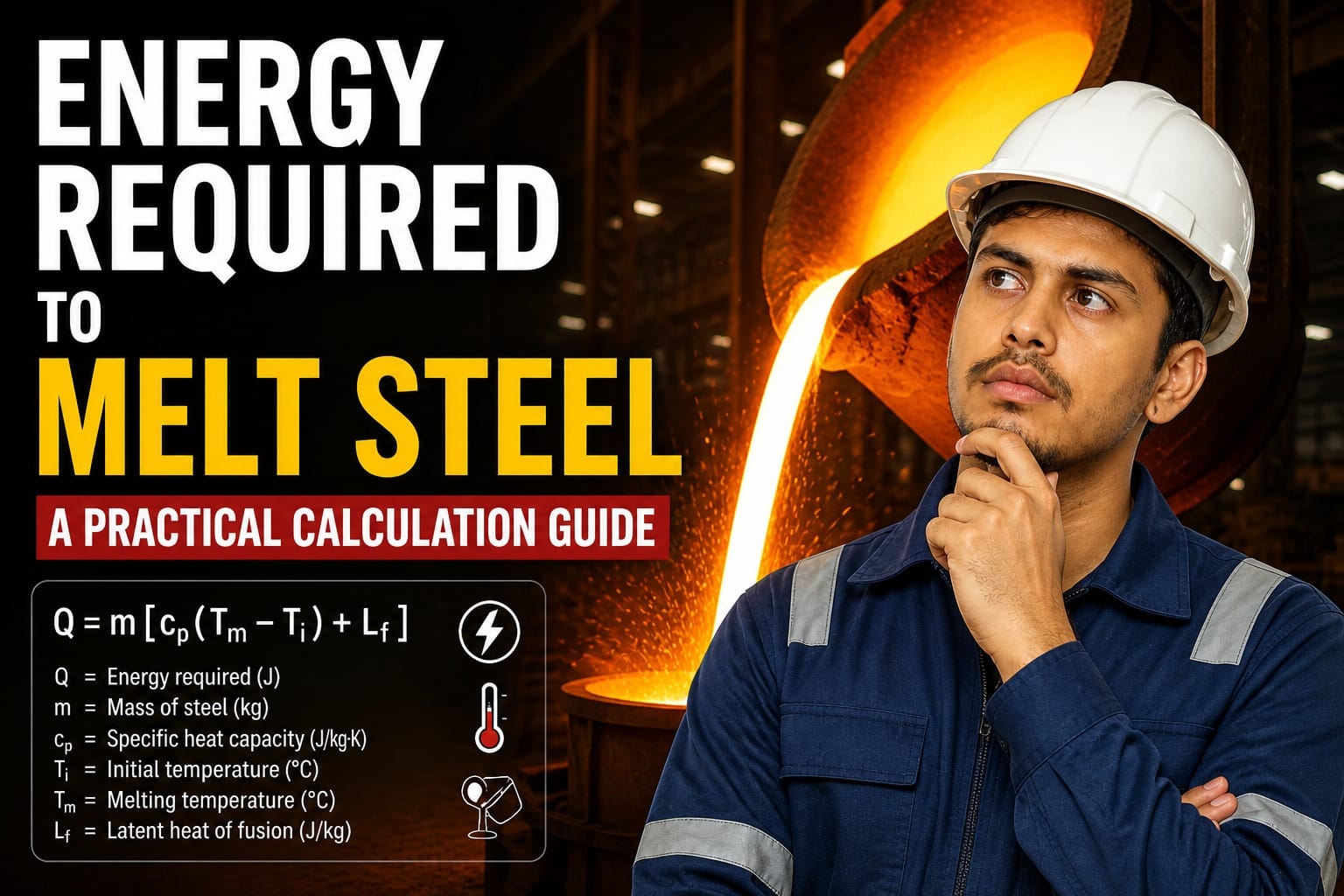
Melting 1 ton of steel theoretically requires 380 kWh, but most induction furnaces consume 450–600 kWh due to heat losses, worn spare parts, and inefficiencies. This guide breaks down the complete energy calculation and explains how proper furnace maintenance and quality spare parts can significantly reduce your electricity costs.
Steel melting is one of the most energy-intensive processes in the metal manufacturing industry. Whether you operate a steel melting furnace, induction furnace, medium frequency furnace, or arc furnace, understanding how much electricity is required to melt steel is critical for controlling operational costs and improving profitability.
Many foundries and steel plants focus only on electricity bills without understanding where power losses occur. In reality, energy consumption depends on multiple factors such as:
- Steel scrap quality
- Furnace design
- Induction furnace coil condition
- Transformer efficiency
- Refractory lining quality
- Cooling system performance
- Capacitor bank efficiency
- Furnace operating practices
Additionally, poor-quality induction furnace spare parts can significantly increase energy losses and furnace downtime.
In this detailed guide, we’ll break down the theoretical energy required to melt steel and explain how proper furnace maintenance can improve efficiency.
Understanding Steel Melting Process
Steel melting happens in three major stages:
Heating Steel Scrap
Steel scrap starts at room temperature and must be heated to its melting point.
Reaching Melting Temperature
Steel melts at approximately 1500°C–1625°C, depending on composition.
Phase Change
Additional heat is required to convert steel from solid form into liquid metal.
This process consumes a large amount of electrical energy.
Step 1: Sensible Heat Calculation
Sensible heat refers to the energy required to increase the temperature of steel from room temperature to its melting temperature.
Formula:
E=Cp×M×ΔTE = C_p \times M \times \Delta TE=Cp×M×ΔT
Variables:
- E = Energy (Joules)
- Cp = Specific heat capacity
- M = Mass of steel
- ΔT = Temperature difference
Example Calculation for 1 Ton Steel
- Steel weight = 1000 kg
- Initial temperature = 25°C
- Melting temperature = 1625°C
Temperature Difference:
1625−25=1600K1625 – 25 = 1600K1625−25=1600K
Specific Heat Capacity of Steel:
- 682 J/kg
Energy Required:
E=682×1000×1600E = 682 \times 1000 \times 1600E=682×1000×1600
Result:
- 1091 MJ
Convert to Electricity Units:
1091×1063600=303.05 kWh\frac{1091 \times 10^6}{3600} = 303.05\text{ kWh}36001091×106=303.05 kWh
Sensible Heat Required:
✅ 303 kWh per ton
Step 2: Latent Heat of Fusion
After steel reaches melting temperature, additional heat is required to change its phase from solid to liquid.
This is called latent heat of fusion.
For Steel:
- 272 kJ/kg
For 1000 kg Steel:
272000÷3600=75.55 kWh272000 \div 3600 = 75.55\text{ kWh}272000÷3600=75.55 kWh
Latent Heat Required:
✅ 75.55 kWh
Total Energy Required to Melt Steel
303+75=380 kWh303 + 75 = 380\text{ kWh}303+75=380 kWh
Theoretical Energy Requirement:
✅ 380 kWh per ton
This is the ideal energy requirement under perfect conditions.
Read Also: How Does an Induction Melting Furnace Coil Work & How Metal Melts Inside It?
Why Actual Energy Consumption is Higher
Most steel plants consume more than theoretical values.
Actual usage often reaches:
✅ 450–600 kWh per ton
Reasons include:
Furnace Heat Loss
- Heat escapes from furnace body.
Refractory Heat Absorption
- Poor refractory absorbs extra heat.
Slag Formation Losses
- Impurities consume additional energy.
Radiation Losses
- Heat radiates into the atmosphere.
Cooling System Inefficiencies
- Poor cooling affects electrical components.
Low-Quality Scrap
- Dirty scrap requires more energy.
Poor Induction Furnace Spare Parts
- Worn components lower efficiency.
Important Induction Furnace Spare Parts That Impact Efficiency
Induction Furnace Coil
The coil creates the electromagnetic field for melting.
Common Issues:
- Water leakage
- Copper tube damage
- Reduced efficiency
- Coil overheating
Services:
- Copper coil manufacturing
- Induction coil repair
- Coil replacement
Furnace Transformer
Provides correct voltage.
Common Problems:
- Overheating
- Oil leakage
- Voltage instability
Services:
- Transformer repair
- Transformer rewinding
Capacitor Bank
Improves power factor.
Benefits:
- Lower electricity bills
- Better furnace performance
Water Cooled Cables
- Carry heavy current safely.
Furnace Yoke
- Improves magnetic efficiency.
Thyristor / SCR Modules
- Controls power supply.
IGBT Modules
- Used in modern furnaces.
Refractory Lining
- Reduces heat losses.
Hydraulic Power Pack
- Controls furnace tilting.
Furnace Control Panel
- Ensures operational safety.
How to Reduce Steel Melting Power Consumption
To improve efficiency:
- Use premium induction furnace spare parts
- Repair damaged coils immediately
- Maintain transformers regularly
- Use quality refractory materials
- Improve scrap quality
- Monitor capacitor bank performance
- Maintain cooling systems
These steps help reduce electricity costs significantly.
Final Thoughts
Understanding the energy required to melt steel helps businesses estimate operating costs more accurately.
However, actual efficiency depends heavily on your furnace condition and the quality of your induction furnace spare parts.
If you’re looking for reliable induction furnace spare parts suppliers, coil repair services, or transformer repair solutions, contact Electro Power Enterprise today.

Rajesh Baraiya, Founder of Electro Power Enterprise, is passionate about making induction furnaces run more efficiently and last longer. Backed by three decades of hands-on experience, He provides practical insights into Induction furnace spare parts, enabling industries to achieve higher efficiency and longer furnace life.