
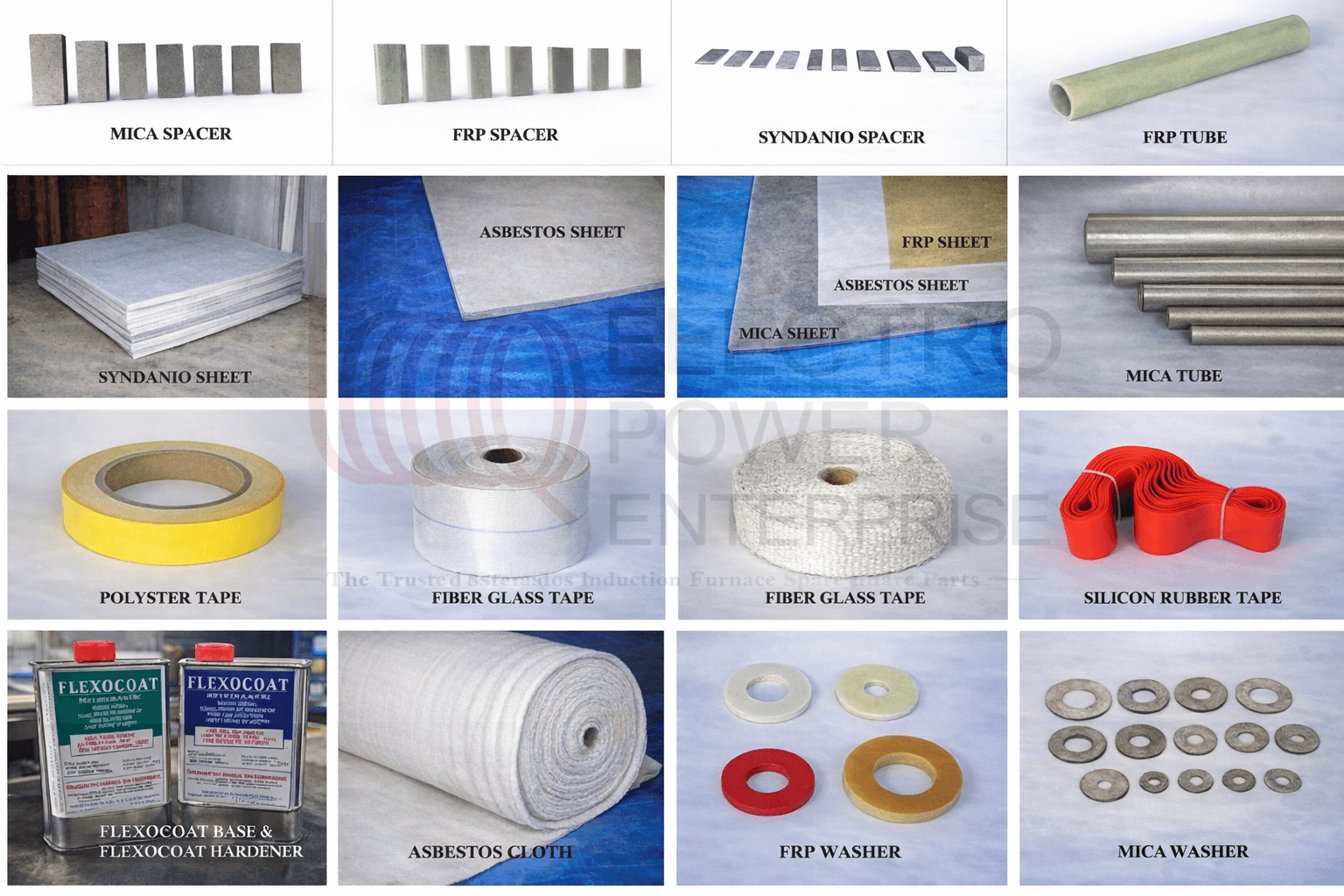
Induction Furnace Insulation Materials: Complete Technical Guide for Efficient & Safe Furnace Operation
This guide explains essential induction furnace insulation materials that improve efficiency, extend coil life, and reduce breakdowns. Explore the right insulation solutions to ensure safe, reliable, and cost-effective furnace operation.
Induction furnace insulation materials are one of the most critical components in any steel melting or metal heating furnace. Proper selection of induction furnace thermal insulation materials and coil insulation materials ensures safe operation, reduced power consumption, and longer furnace life.
In modern steel plants and foundries, high-quality induction furnace insulation products help maintain consistent melting performance, reduce downtime, and protect expensive electrical components. This detailed technical guide covers all major insulation materials used in induction furnaces, their specifications, applications, and advantages.
Importance of Insulation Materials in Induction Furnace
An induction furnace works on electromagnetic induction and generates extremely high heat (up to 1600–1700°C). Without proper thermal and electrical insulation, furnace components can fail quickly.
Key functions of furnace insulation materials:
- Prevent heat loss and improve efficiency
- Provide electrical insulation to coil and busbar
- Protect furnace structure from high temperature
- Increase coil and refractory life
- Reduce maintenance and breakdown
- Ensure operator safety
Using premium quality induction furnace insulation materials can improve furnace performance by 20–30% and significantly reduce downtime.
1. Syndanio Products for Induction Furnace
Syndanio is a heavy-duty laminated insulation material made from resin-bonded glass fabric. It provides excellent mechanical strength and electrical insulation.
A. Syndanio Sheets
Syndanio sheets are widely used in induction furnace structure and coil insulation.
Applications:
- Coil support insulation
- Busbar insulation
- Furnace structure insulation
- Panel board insulation
Technical Specifications:
- Continuous temperature: 350 – 550°C
- Dielectric strength: 8–12 kV/mm
- Density: 1.8–2.0 g/cm³
- High mechanical strength
- Arc and flame resistant
Benefits:
- Long service life
- High load-bearing capacity
- Excellent electrical insulation
B. Syndanio Spacers
Used to maintain proper spacing between coil turns and structural components.
Features:
- High compressive strength
- Non-magnetic
- Heat resistant
- Accurate dimension stability
2. Mica Products for Induction Furnace
Mica is the most important high-temperature insulation material used in induction furnace coils due to its exceptional dielectric strength and heat resistance.
A. Mica Sheets
Applications:
- Induction furnace coil insulation
- Busbar insulation
- Furnace panel insulation
Technical Specifications:
- Temperature resistance: up to 1200°C
- Dielectric strength: 18–25 kV/mm
- Excellent thermal stability
- Fire resistant
B. Mica Tubes
Used as insulation sleeves for bolts and electrical connections.
Advantages:
- High voltage resistance
- Heat resistant
- Strong and lightweight
C. Mica Segments
Curved mica segments are used in coil insulation where round shape is required.
D. Mica Tapes
Used for wrapping furnace coils and busbars.
Temperature resistance: up to 700–800°C
Features: High dielectric strength and flexibility
E. Mica Washers
Provide insulation in bolted joints and electrical connections.
| Parameter | Typical Value |
| Continuous Temp. | 700–900°C |
| Dielectric Strength | 15–20 kV/mm |
| Compressive Strength | High |
| Thickness | 0.5 – 3 mm |
| Moisture Absorption | Very Low |
F. Mica Spacers
Maintain spacing between coil turns and prevent short circuits.
3. FRP (Fiber Reinforced Plastic) Products
FRP insulation materials are widely used due to their high strength, light weight, and corrosion resistance.
A. FRP Sheets
Applications:
- Structural insulation
- Furnace panels
- Electrical insulation boards
Technical Specifications:
- Temperature resistance: 140 –180°C
- High mechanical strength
- Moisture resistant
- Non-corrosive
B. FRP Spacers
Used between coil turns and support structures.
C. FRP Washers
Provide insulation in bolted connections and busbars.
D. FRP Tubes
Used as sleeves for tie rods, bolts, and electrical insulation.
E. FRP BUSH
| Parameter | Typical Value |
| Continuous Temp. | 120–180°C |
| Dielectric Strength | 10–15 kV/mm |
| Compressive Strength | 250–350 MPa |
| Water Absorption | <0.5% |
| Chemical Resistance | Excellent |
Technical Note:
Provides mechanical load-bearing insulation for studs, tie rods, and mounting bolts.
4. Asbestos and Ceramic Insulation Products
High-temperature thermal insulation materials protect furnace structure and reduce heat loss.
A. Asbestos Mill Boards
Used for thermal insulation in furnace panels and structures.
Temperature resistance: up to 500°C
Features: Heat resistant and durable
B. Asbestos Cloth
Used for wrapping hot joints and heat protection covers.
C. Ceramic Blankets
Modern replacement for asbestos with higher temperature resistance.
Technical Specifications:
- Temperature resistance: 1000–1400°C
- Low thermal conductivity
- Lightweight and flexible
- Excellent thermal shock resistance
5. PTFE Sheets (Teflon Insulation Sheets)
PTFE sheets provide excellent electrical insulation and chemical resistance.
Technical Specifications:
- Temperature resistance: up to 260°C
- High dielectric strength
- Chemical resistant
- Non-stick surface
Applications:
- Electrical insulation barriers
- Terminal insulation
- Chemical protection areas
6. Induction Furnace Coil Insulation Materials
Coil insulation is the heart of furnace safety and efficiency. Proper coil insulation increases coil life and reduces electrical failure.
A. Fiber Glass Tape / Glass Fiber Woven Tape
Used for coil wrapping and electrical insulation.
Technical Specifications:
- Temperature resistance: up to 550°C
- High tensile strength
- Non-flammable
- Excellent dielectric strength
| Parameter | Typical Value |
| Continuous Temp. | 550–600°C |
| Dielectric Strength | 3–5 kV |
| Tensile Strength | 2000–3000 N/25 mm |
| Thickness | 0.15 – 0.50 mm |
| Flame Resistance | Non-flammable |
B. Flexocoat Base and Hardener
Used as protective coating on induction furnace coils.
| Parameter | Typical Value |
| Working Temp. | Up to 180–200°C |
| Dielectric Strength | Improved surface insulation |
| Adhesion | Excellent (Copper / FRP / Mica) |
| Moisture Resistance | Very High |
| Application | Brush / Roller / Spray |
Functions:
- Improves insulation strength
- Moisture protection
- Heat resistance
- Long coil life
C. Permali Coil Support
High-strength laminated support blocks used to support furnace coils.
Features:
- High compressive strength
- Heat resistant
- Durable and long-lasting
D. Silicon Rubber Tape
Flexible high-temperature insulation tape.
Temperature resistance: 250–300°C
Applications: Coil joints and cable insulation
| Parameter | Typical Value |
| Operating Temp. | -50°C to +260°C |
| Dielectric Strength | ~8 kV |
| Elongation | >300% |
| Water Resistance | Excellent |
| Chemical Resistance | Good |
E. Polyester Tape
Used for general electrical insulation and binding.
Advantages:
- High dielectric strength
- Moisture resistant
- Flexible and strong
F. Coil Spacers
Coil spacers maintain proper gap between coil turns and ensure cooling.
- Syndanio spacers
- Mica spacers
- FRP coil spacers
Proper spacing improves cooling efficiency and prevents short circuits.
Advantages of Using High-Quality Insulation Materials
Using premium induction furnace insulation materials provides several operational benefits:
- Improves furnace efficiency by 20–30%
- Reduces power consumption
- Increases coil life
- Prevents electrical failure
- Reduces maintenance cost
- Ensures safe operation
- Minimizes production downtime
How to Choose the Right Induction Furnace Insulation Material Supplier
When selecting an insulation material supplier, always check:
- Material quality and specifications
- Heat and dielectric strength
- OEM compatibility
- Availability of all insulation products
- Technical support
- Competitive pricing
A reliable supplier ensures consistent quality and faster delivery for uninterrupted furnace operation.
Conclusion
Induction furnace insulation materials are essential for efficient and safe furnace operation. From syndanio sheets, mica products, FRP materials, ceramic blankets, PTFE sheets, fiber glass tapes, silicon rubber tapes, polyester tape, permali supports, flexocoat, and coil spacers, each insulation component plays a vital role in furnace performance.
Using high-quality induction furnace coil insulation materials ensures:
- Better melting efficiency
- Longer furnace life
- Reduced breakdown
- Lower maintenance cost
- Higher production output
For best results, always choose high-grade induction furnace insulation materials with proper technical specifications to achieve reliable and long-lasting furnace performance.
Need OEM-compatible induction furnace insulation materials with fast availability? Get in touch with Electro Power Enterprise for expert guidance, competitive pricing, and dependable insulation solutions tailored to your furnace requirements.

Rajesh Baraiya, Founder of Electro Power Enterprise, is passionate about making induction furnaces run more efficiently and last longer. Backed by three decades of hands-on experience, He provides practical insights into Induction furnace spare parts, enabling industries to achieve higher efficiency and longer furnace life.