Cooling System Design for Induction Furnaces: Hoses, Flow Switches & Sensors
Why Cooling Is Critical in Induction Furnace Operation
In an induction furnace, cooling system design is as critical as the power supply itself. High currents, strong electromagnetic fields, and continuous thermal loads generate intense heat in the induction furnace coil, power supply, water-cooled cables, capacitors, and bus bars. Without a properly designed and monitored cooling system, component failure, unplanned shutdowns, and serious safety risks are inevitable.
This guide explains the complete cooling system design for induction furnaces, focusing on hoses, flow switches, and sensors, and how the right selection of these components directly improves furnace reliability and service life.
Key Components of an Induction Furnace Cooling System
A standard induction furnace cooling system includes:
- Cooling water source (cooling tower / chiller / heat exchanger)
- Water distribution manifolds
- Cooling hoses and pipes
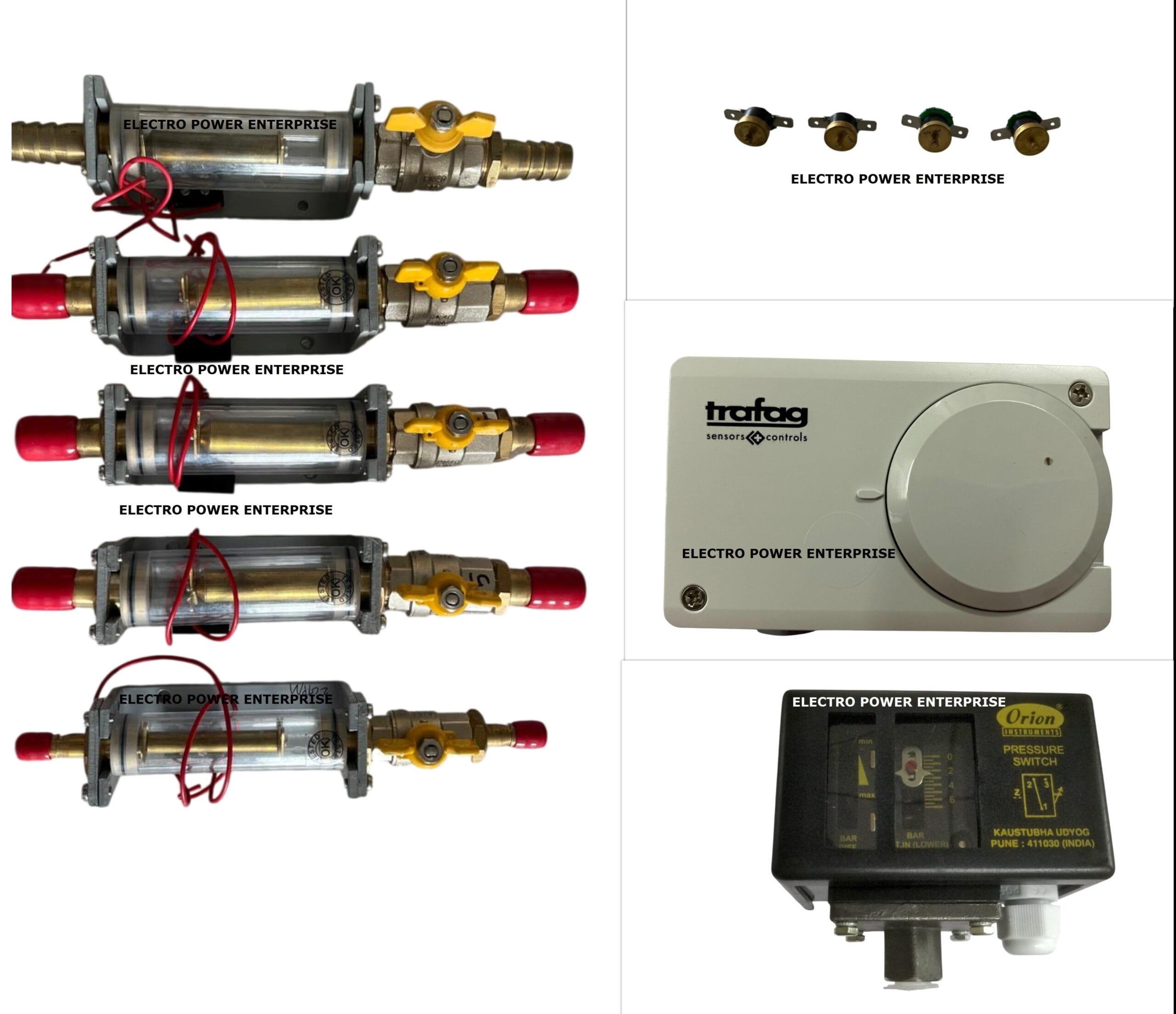
- Flow switches and flow meters
- Temperature and pressure sensors
- Interlock system connected to the furnace power supply
Each component must work together to ensure continuous, uniform, and monitored water flow.
Carbon Free Hoses in Induction Furnaces
Role of Cooling Hoses
Cooling hoses transport water to and from critical furnace components such as:
- Induction furnace coils
- Water-cooled cables
- Power supply thyristors / IGBTs
- Capacitor banks
- Furnace bus bars
These hoses operate in high-temperature, high-current, and vibration-prone environments, making material selection extremely important.
Types of Cooling Hoses Used
- Carbon Free Rubber Hoses – Flexible, cost-effective, used in medium-temperature zones
- Reinforced Cooling Hoses – Designed for high pressure and continuous duty
- Stainless Steel Braided Hoses – Used near coils and power electronics for added safety
Key Design Considerations for Cooling Hoses
- Correct inner diameter to maintain required water velocity
- Pressure rating suitable for system operating pressure
- Heat resistance near the furnace coil and yoke area
- Electrical insulation to prevent stray current issues
- Secure hose clamping using stainless steel hose clamps
Improper hose selection can cause flow restriction, leakage, or sudden hose failure, leading to furnace trips.
Flow Switches: The Safety Backbone of Cooling Systems
Why Flow Switches Are Mandatory
Flow switches protect induction furnaces from catastrophic overheating. They continuously monitor water flow and trigger an interlock if flow drops below a safe limit.
In most induction furnace designs, the power supply will not start or will immediately trip if flow switches detect insufficient cooling.
Where Flow Switches Are Installed
- Induction furnace coil inlet lines
- Water-cooled cable circuits
- Power supply semiconductor cooling lines
- Capacitor bank cooling circuits
Best Practices for Flow Switch Selection
- Match flow switch rating with pipe diameter
- Ensure compatibility with cooling water quality
- Choose fast-response switches for coil protection
A properly installed flow switch prevents coil burnouts, cable damage, and SCR failure.
Temperature Sensors in Induction Furnace Cooling
Importance of Temperature Monitoring
While flow switches confirm water movement, temperature sensors confirm cooling effectiveness. Rising outlet temperature is often the first warning sign of scaling, blockage, or reduced heat transfer.
Typical Monitoring Points
- Coil water outlet temperature
- Power supply heat sink temperature
- Water-cooled cable return lines
- Cooling water inlet and outlet headers
Maintaining stable temperature readings helps extend coil insulation life and semiconductor reliability.
Pressure Sensors & Flow Meters (Optional but Recommended)
Advanced induction furnace cooling systems also include:
- Pressure switches to detect pump failure or blockage
- Flow meters for real-time flow measurement
- Differential pressure sensors to identify scaling inside coils
These devices enable predictive maintenance instead of reactive repairs.
Common Cooling System Design Mistakes
- Undersized cooling hoses causing flow restriction
- Poor hose routing near high-heat zones
- Single flow switch for multiple critical components
- No temperature monitoring on coil outlet
- Ignoring water quality and scaling issues
Avoiding these mistakes significantly improves induction furnace uptime and safety.
Best Practices for Reliable Cooling System Design
- Use dedicated cooling circuits for coils, cables, and power supply
- Maintain recommended water velocity and pressure
- Install flow switches on every critical line
- Monitor inlet and outlet temperatures continuously
- Schedule regular inspection of hoses and clamps
A well-designed cooling system directly increases induction furnace life, melting efficiency, and operator safety.
How Electro Power Enterprise Supports Induction Furnace Cooling Systems
We manufactures and supplies export-quality induction furnace cooling system components, including:
- Industrial cooling hoses
- Stainless steel and heavy-duty hose clamps
- Flow switches and flow sensors
- Temperature sensors and furnace interlock components
- Water-cooled cables and copper fittings
Our cooling system components are designed to operate reliably in high-duty steel plants and foundries worldwide.
Conclusion
An induction furnace is only as reliable as its cooling system. Proper selection and placement of hoses, flow switches, and sensors ensures stable operation, protects expensive furnace components, and minimizes unplanned downtime.
For long-term, trouble-free induction furnace operation, cooling system design must never be an afterthought—it must be engineered with the same precision as the furnace itself.
Contact Electro Power Enterprise for technical guidance and high-quality induction furnace spare parts designed for demanding industrial environments.
Also Read: Water-Cooled Cables in Induction Furnaces – Types, Function, and Common Failures

Rajesh Baraiya, Founder of Electro Power Enterprise, is passionate about making induction furnaces run more efficiently and last longer. Backed by three decades of hands-on experience, He provides practical insights into Induction furnace spare parts, enabling industries to achieve higher efficiency and longer furnace life.