7 Common Induction Furnace Problems & Repair Solutions
Induction furnaces are the backbone of modern metal melting industries, including steel plants, foundries, and casting units. Their efficiency, precision, and energy-saving capabilities make them a preferred choice for melting operations. However, continuous exposure to high temperatures, electrical loads, and mechanical stress makes these systems vulnerable to wear and failure.
Unexpected breakdowns often lead to production loss, safety risks, and costly downtime. This is why induction furnace repair and regular furnace repairs play a critical role in maintaining smooth operations. Whether it is routine maintenance or emergency furnace repair, understanding the root causes of problems and applying practical solutions can significantly improve furnace life and performance.
Common Problems in Induction Furnaces
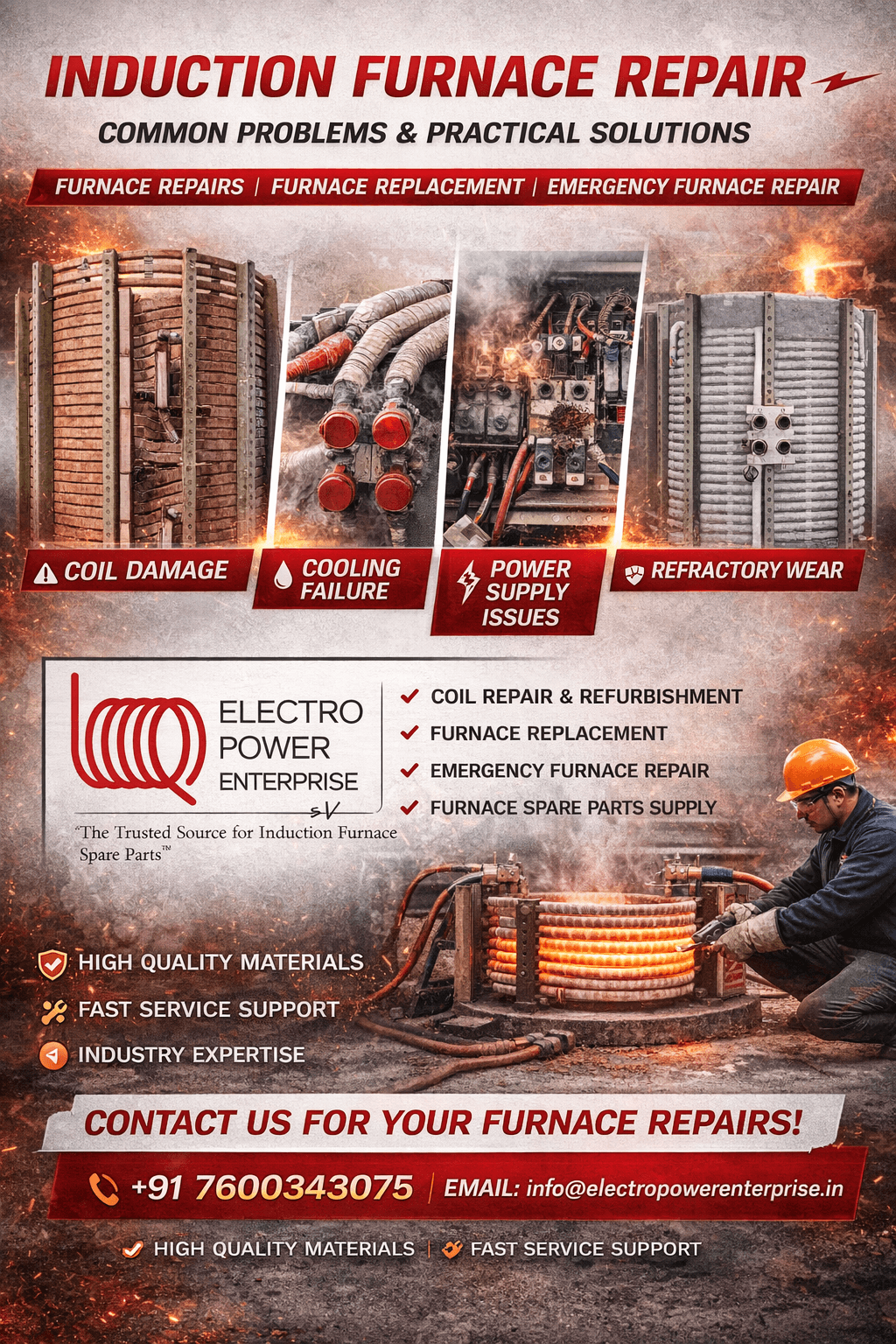
- Induction Coil Damage or Failure
The induction furnace coil is the heart of the furnace. It generates the electromagnetic field required for heating and melting metal. Due to continuous thermal cycling and high current flow, coil damage is one of the most common reasons for furnace repairs.
Common Causes:
- Overheating due to poor cooling
- Insulation failure over time
- Mechanical stress and vibration
- Use of low-quality materials
Effects:
- Reduced heating efficiency
- Uneven melting
- Increased energy consumption
- Unexpected shutdowns requiring urgent induction furnace repair
Practical Solutions:
- Perform regular inspection of coil insulation
- Maintain proper water flow and cooling
- Use high-grade insulation like mica and fiberglass
- Opt for professional coil refurbishment
- Consider furnace replacement if damage is severe
- Water Cooling System Failure
Cooling systems are essential for maintaining safe furnace temperatures. Any failure in this system can quickly lead to overheating and serious damage, often requiring emergency furnace repair.
Common Causes:
- Blocked pipelines
- Scaling due to untreated water
- Pump failure or low pressure
- Leakage in joints
Effects:
- Overheating of coil, busbar and cables
- Reduced equipment life
- Increased risk of major furnace repairs
Practical Solutions:
- Ensure consistent water flow and pressure
- Use treated or soft water
- Clean pipelines regularly
- Install flow monitoring systems
- Schedule preventive maintenance
- Power Supply Failure (SCR, Diodes, Thyristors)
The electrical system controls furnace performance. Failure of components like SCRs, diodes, or thyristors can stop the entire operation and require immediate induction furnace repair.
Common Causes:
- Voltage fluctuations
- Overloading
- Poor cooling of panels
- Aging components
Effects:
- Sudden shutdown
- Inconsistent heating
- Increased dependency on emergency furnace repair services
Practical Solutions:
- Install surge protection systems
- Regular testing of electrical components
- Ensure proper ventilation and cooling
- Replace faulty parts with high-quality components
- Refractory Lining Damage
Refractory lining protects the furnace coil structure from extreme temperatures and molten metal. Damage to lining is a major cause of frequent furnace repairs.
Common Causes:
- Thermal shock
- Improper installation
- Chemical reactions
- Continuous wear
Effects:
- Heat loss
- Metal leakage risk
- Damage to internal components
Practical Solutions:
- Use high-quality refractory materials
- Follow correct installation procedures
- Monitor lining condition regularly
- Plan timely maintenance or partial furnace replacement
- Busbar Overheating
Busbars carry heavy current and are crucial for power transmission. Any issue can lead to efficiency loss and safety hazards.
Common Causes:
- Loose connections
- Oxidation
- Poor conductivity
- Inadequate cooling
Effects:
- Energy losses
- Overheating
- Frequent need for furnace repairs
Practical Solutions:
- Ensure proper tightening of connections
- Use EC-grade copper busbars
- Maintain cooling systems
- Conduct thermal inspections
- Water-Cooled Cable Failure
Water-cooled cables are essential for safe and efficient power transfer. Damage to these cables often leads to urgent induction furnace repair needs.
Common Causes:
- Leakage
- Improper handling
- Insulation damage
- Mechanical wear
Effects:
- Power loss
- Safety risks
- System failure requiring emergency furnace repair
Practical Solutions:
- Regular inspection for leaks
- Proper clamping and support
- Avoid sharp bends
- Replace damaged cables immediately
- Structural and Mechanical Issues
The furnace body and structure must withstand continuous stress and high temperatures. Weak structures often lead to repeated furnace repairs.
Common Causes:
- Poor fabrication
- Continuous vibration
- Thermal expansion
Effects:
- Misalignment
- Reduced efficiency
- Increased maintenance costs
Practical Solutions:
- Use high-quality materials
- Conduct periodic inspections
- Reinforce mechanical joints
Preventive Maintenance Strategy
Preventive maintenance is the most effective way to reduce the need for frequent induction furnace repair and avoid costly downtime.
✅ Best Practices:
- Daily inspection of cooling systems
- Regular monitoring of electrical parameters
- Scheduled maintenance of coils and cables
- Use of high-quality spare parts
- Keeping backup components ready
Importance of Timely Repair
Ignoring small issues can lead to major failures and unplanned shutdowns.
Risks of Delay:
- Increased downtime
- Higher repair costs
- Safety hazards
- Need for complete furnace replacement
Benefits of Timely Action:
- Longer equipment life
- Improved efficiency
- Reduced dependency on emergency furnace repair
- Stable production output
Furnace Repair vs Furnace Replacement
One of the biggest decisions industries face is whether to repair or replace furnace components.
When to Choose Furnace Repairs:
- Minor to moderate damage
- Cost-effective solution
- Quick turnaround
When to Choose Furnace Replacement:
- Severe structural or coil damage
- Frequent breakdowns
- Long-term reliability issues
A proper inspection helps determine whether furnace repairs or full furnace replacement is the better option.
Role of Quality Spare Parts
Using high-quality spare parts reduces the frequency of furnace repairs and improves overall performance.
Benefits:
- Higher efficiency
- Better durability
- Reduced downtime
- Lower long-term costs
Why Professional Induction Furnace Repair is Important
Professional service providers ensure accurate diagnosis and effective solutions.
Advantages:
- Expert handling of complex issues
- Reliable repair work
- Proper testing and quality checks
- Reduced risk of repeat failures
This minimizes the need for repeated induction furnace repair and ensures smooth operation.
Conclusion
Induction furnaces are essential for modern industrial operations, but their efficiency depends on proper maintenance and timely repair. From coil damage to cooling system failures, each problem requires immediate attention to avoid major breakdowns.
By adopting preventive maintenance practices, using high-quality spare parts, and relying on professional services, industries can reduce downtime, avoid frequent furnace repairs, and minimize the need for costly furnace replacement.
Timely action not only improves performance but also reduces the chances of unexpected failures requiring emergency furnace repair.
Need Expert Induction Furnace Repair Services?
We at Electro Power Enterprise provide:
- Induction Furnace Coil Manufacturing
- Coil Repair & Refurbishment
- Complete Furnace Repairs
- Emergency Furnace Repair Support
- Furnace Replacement Solutions
- Water-Cooled Cables & Busbars
✅ High-quality materials
✅ Fast service support
✅ Industry expertise
📞 Contact: +91 7600343075
📧 Email: info@electropowerenterprise.in

Rajesh Baraiya, Founder of Electro Power Enterprise, is passionate about making induction furnaces run more efficiently and last longer. Backed by three decades of hands-on experience, He provides practical insights into Induction furnace spare parts, enabling industries to achieve higher efficiency and longer furnace life.